Annaëlle Bénard
ORCID: 0000-0002-0734-9438
🖂: annaelle.benard [at] inrae [dot] fr

Postdoctoral position
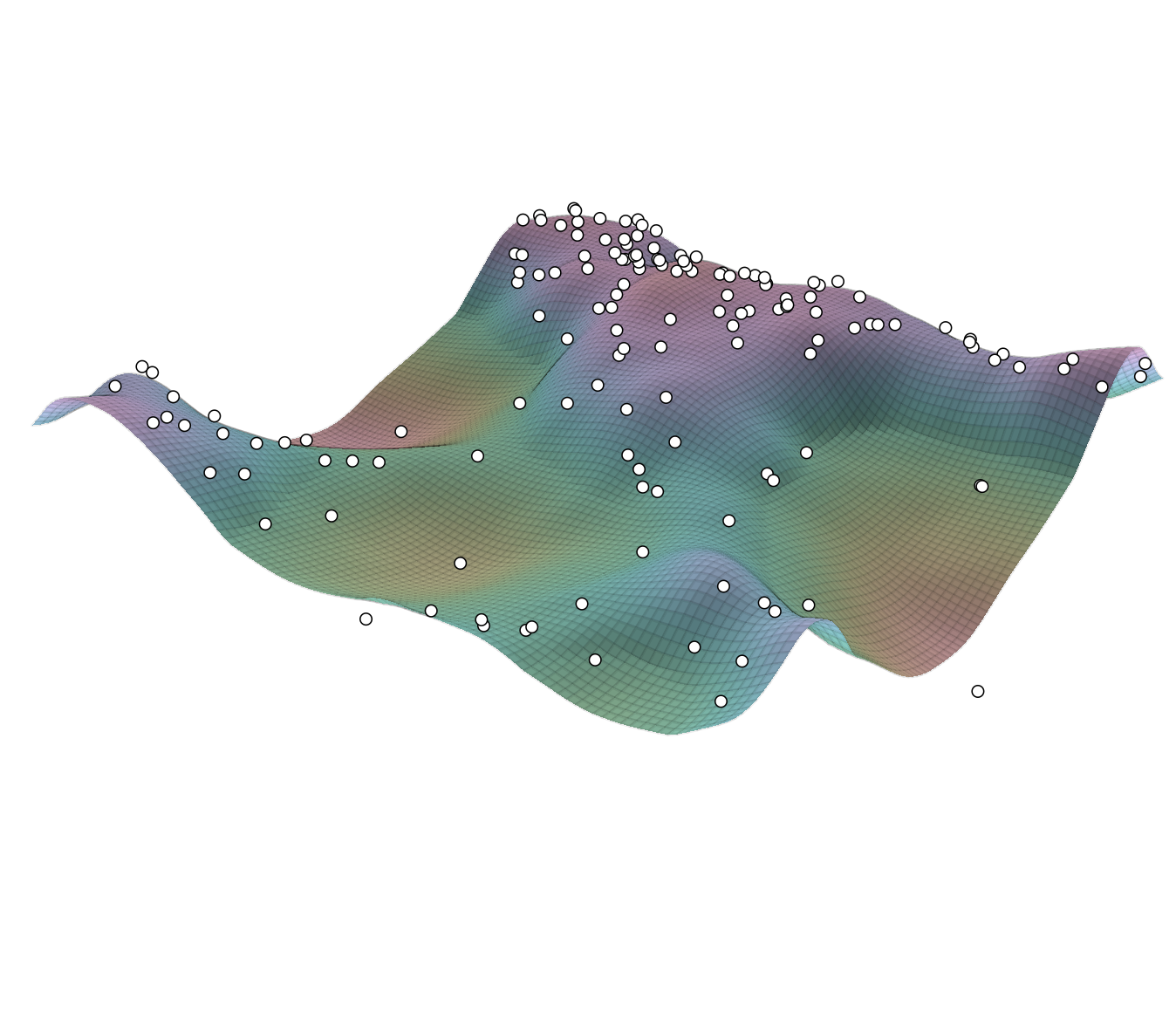
Joint likelihood approaches for integrating opportunistic and structured data in species distribution modelling (2025–)
Biostatistics and Spatial Processes, INRAE
Project PAPEETE
Postdoctoral position
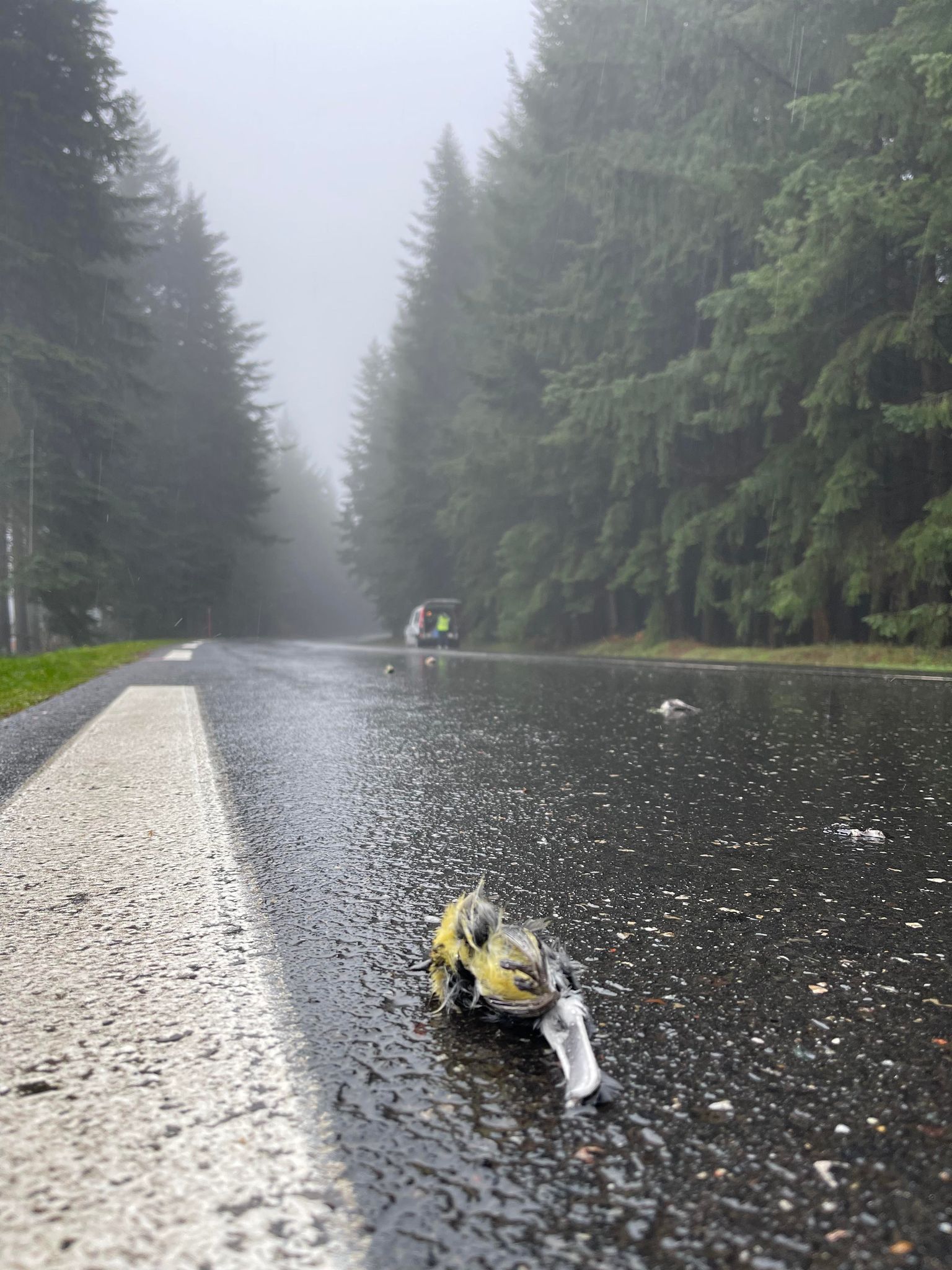
Studying wildlife–vehicle collisions through citizen science (2024)
LPO Auvergne-Rhône-Alpes &
LEHNA UMR 5023
Reports
- Estimating the impacts of road mortality on wildlife in metropolitan France based on unstructured data, Bénard A. & Lengagne T., LPO AuRA – CNRS LEHNA (2025).
- Estimating the impacts of road mortality – Auvergne-Rhône-Alpes breakdown, Bénard A. & Lengagne T., LPO AuRA – CNRS LEHNA (2025).
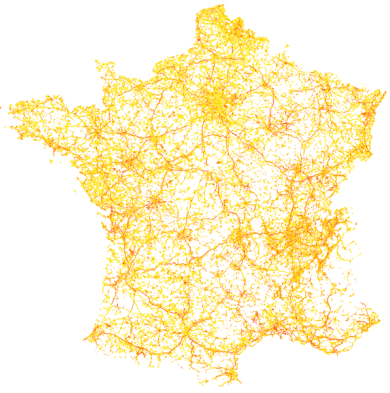
- Wildlife–vehicle collision density maps for metropolitan France based on semi-structured and unstructured data, Bénard A. & Lengagne T., LPO AuRA – CNRS LEHNA (2025).
- View maps online
Funded by DRÉAL AuRA, LPO France, DGITM (Ministry of Ecological Transition), Fondation F. Sommer
PhD thesis (2023)
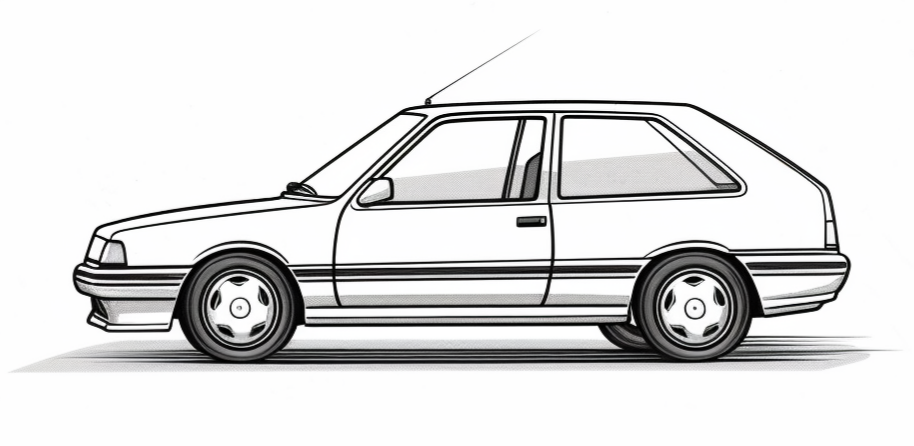
Road ecology: towards a predictive model of wildlife–vehicle collision risk
LEHNA UMR 5023, CNRS – Université Claude Bernard Lyon 1 – ENTPE.
Engagement: Communications Officer, DocE2M2 Association (2021–2023). Teaching (192h)
Publications
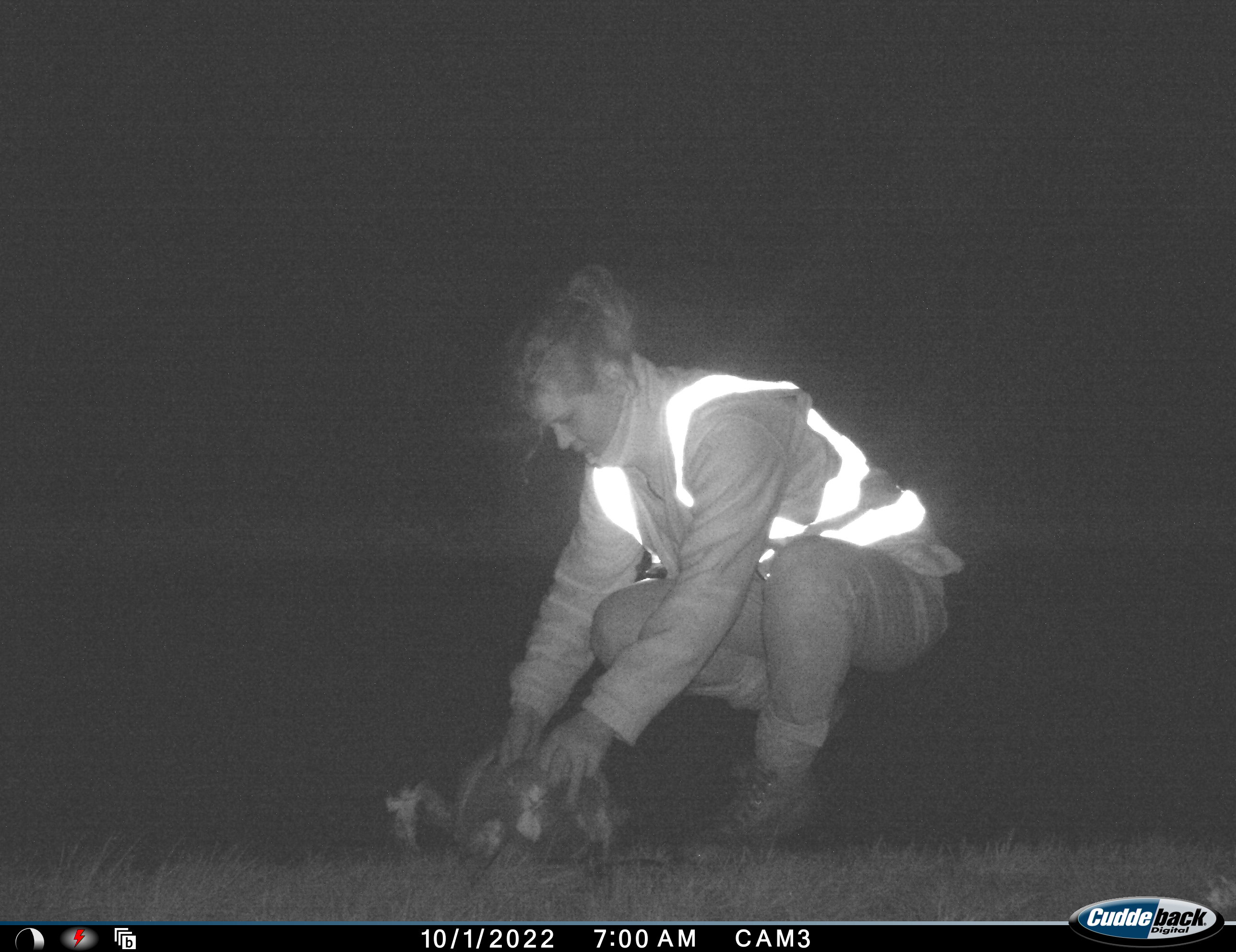
- Bénard, A., Bonenfant, C., & Lengagne, T. (2024). Traffic and weather influence on small wildlife carcass persistence time on roads. Transportation Research Part D.
- Bénard, A., Lengagne, T., & Bonenfant, C. (2024). Integration of animal movement into vehicle-wildlife collision models. Ecological Modelling.
- Bénard, A., & Lengagne, T. (2025). Experimental and Simulated Approaches to Roadkill Persistence: Implications for Road Mortality Assessment. bioRxiv.
- Bénard, A., & Lengagne, T. (2025). What We Miss on the Road: Visual Attention and Species Detectability in Roadkill Surveys. bioRxiv.
PhD fellowship from the École Doctorale E2M2
Master's in Behavioural Ecology and Wildlife Management (2020)
University of Burgundy
Simulation and abundance estimation from camera traps
BEER centre, Durham University, UK (Professor Philip Stephens)
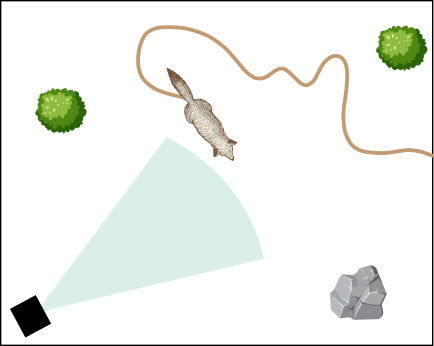
Estimating species abundance is a major challenge in ecology, particularly for cryptic, nocturnal, or rare species. Camera traps offer an alternative to intensive or impractical field surveys.
Within an individual-based simulation framework, we tested three published estimation methods (Time-to-Event, Moeller et al. 2018; Random Encounter Model, Lucas et al. 2015; Distance Sampling, Howe et al. 2017) using animal trajectories based on correlated random walks. The work evaluates the accuracy, robustness, and sampling effort required to obtain reliable estimates.
Hierarchical organisation of food exchange in the ant Lasius niger
IPHC UMR7178, Strasbourg (Dr Cédric Sueur)
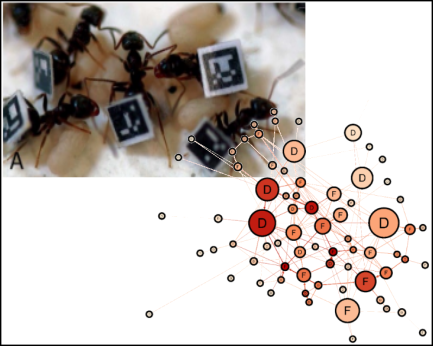
Using individual tags, it becomes possible to observe trophallaxis exchanges (liquid food transfer) between all individuals in a social insect colony. We reconstructed food exchange networks to understand how castes (foragers, workers) structure the circulation of food in Lasius niger.
The study reveals a hierarchical network in which certain individuals play the role of key intermediaries, ensuring efficient resource distribution throughout the colony.
Publication
- Quque, M., Bles, O., Bénard, A., et al. (2021). Hierarchical networks of food exchange in the black garden ant Lasius niger. Insect Science.
Bachelor's in Biology & Mathematics (double major)
Sorbonne University – Roscoff Marine Station.
Final year at Dalhousie University (Nova Scotia, Canada).